
Food guide
What Is Tteokbokki? Korea's Spicy Rice Cake Street Food
Tteokbokki is one of the Korean foods that looks simple until you take the first bite.
Food guide
Tteokbokki is one of the Korean foods that looks simple until you take the first bite.
Quick facts
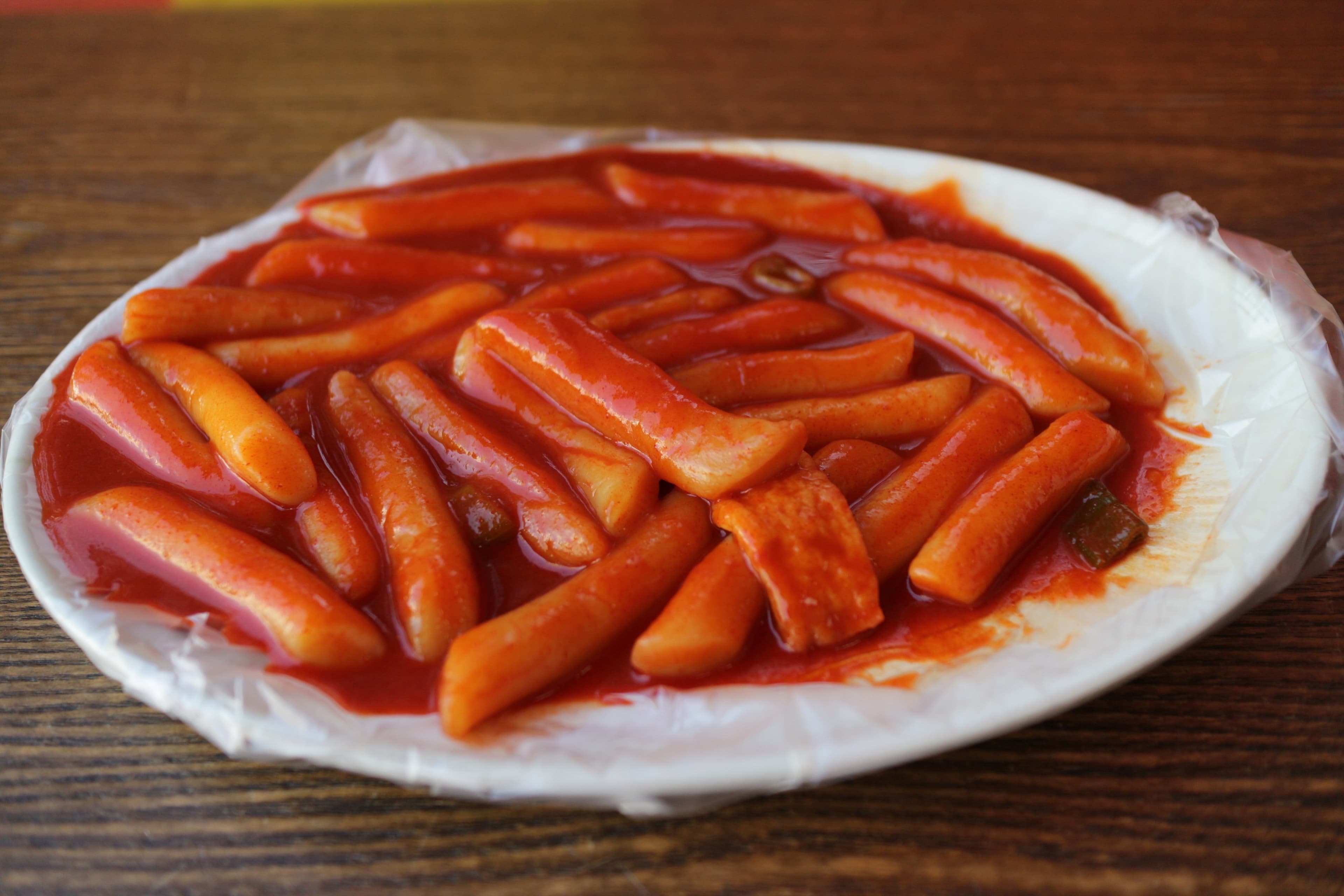
It is red, chewy, usually spicy — and for many Koreans it feels more like a memory than a normal snack. Tteokbokki, or 떡볶이, is made with chewy rice cakes called tteok, cooked in a red sauce from gochujang (Korean red pepper paste) — spicy, a little sweet, thick, and sticky enough to coat the rice cakes. For many Koreans it is after-school food, market food, something you eat standing near a small shop, sharing a plate with friends, or ordering when you want something spicy and comforting at once.
The texture is the first thing to notice. Tteokbokki rice cakes are not soft like noodles or crunchy like fried snacks — they are chewy. You bite into one piece, the sauce sticks, and the heat builds slowly. If you are new to Korean food, the texture may surprise you; tteokbokki is bold, saucy, and direct, not delicate. The classic red version usually includes eomuk (fish cake) pieces that soak up the sauce; some places add boiled eggs, cabbage, or extra fish cake depending on the shop.
There is no single fixed version. A market stall, a school-area bunsik shop, and a modern chain or delivery restaurant may all make it differently — cheese, noodles, sausages, cream sauce, very spicy or sweeter, thick and dark or lighter and soupy. The word bunsik is useful here: casual snack food at a bunsikjip (snack shop) selling tteokbokki, gimbap, fried snacks, ramyeon, sundae, fish cake soup, and other simple foods. For many Koreans a bunsik shop is a small piece of school and neighborhood life.
Tteokbokki is good by itself but often feels better with something next to it. Twigim (fried snacks) are one of the best pairings — dip fried dumplings, seaweed rolls, squid, or vegetables into the red sauce. Sundae is another common pairing; it may sound intense in English, but it is very normal bunsik food, often ordered with tteokbokki and dipped in the sauce. Boiled eggs soften the spice; ramyeon or jjolmyeon noodles and cheese stretch the sauce further.
If you are worried about spice, start carefully — Korean tteokbokki can be much hotter than it looks. Some versions are mild and sweet; others are seriously spicy. Order a small portion first; locals take breaks too. Old-school market tteokbokki is usually simple — rice cakes, red sauce, fish cake, maybe eggs — direct and nostalgic. Modern chain or delivery tteokbokki can be heavier, richer, and more customizable with cheese, rose sauce, or big sets with fried food and noodles. Both can be fun; they do not give the same feeling.
Tteokbokki shows a side of Korean food that is casual and emotional at once — not royal cuisine or a beautiful plated dish, but the food people crave when they want something spicy, chewy, cheap, and familiar. The photo on this page shows one common red-sauce style, but tteokbokki can look different depending on where you buy it. If you see a small shop with steam, red sauce, and people eating from paper plates or simple bowls, that is already a good sign. Order a small portion, add fried snacks if you can, try one rice cake while it is hot — then you will understand why this simple red snack has stayed in Korean daily life for so long.
Keep exploring
Food guide
A local-friendly first guide to Korean convenience store food, quick meals, snacks, drinks, and 24-hour culture.
Read guide →
Food guide
A local-friendly guide to Korea’s sweet egg sandwich, from old street stalls to modern toast chains.
Read guide →
Food guide
A local-friendly guide to Korean cup ramyeon, hot water machines, convenience store counters, and easy local pairings.
Read guide →
Food
Simple HAEMIL food guides for understanding what to eat in Korea and how to order without turning every meal into homework.
Read guide →