
Food guide
What Is Eomuk? Korea's Fish Cake Street Snack Explained
Eomuk is one of those Korean foods that can be easy to miss if nobody explains it.
Food guide
Eomuk is one of those Korean foods that can be easy to miss if nobody explains it.
Quick facts
You may see it in tteokbokki, on a wooden skewer in hot broth, folded, rolled, flat, round, spicy, or stuffed with cheese — and hear people call it eomuk or odeng. Eomuk, or 어묵, is Korean fish cake made from processed fish paste mixed with starch and seasoning. In English "fish cake" can sound strange — it is not sweet and not dessert at all. It is savory, chewy, and very everyday in Korea.
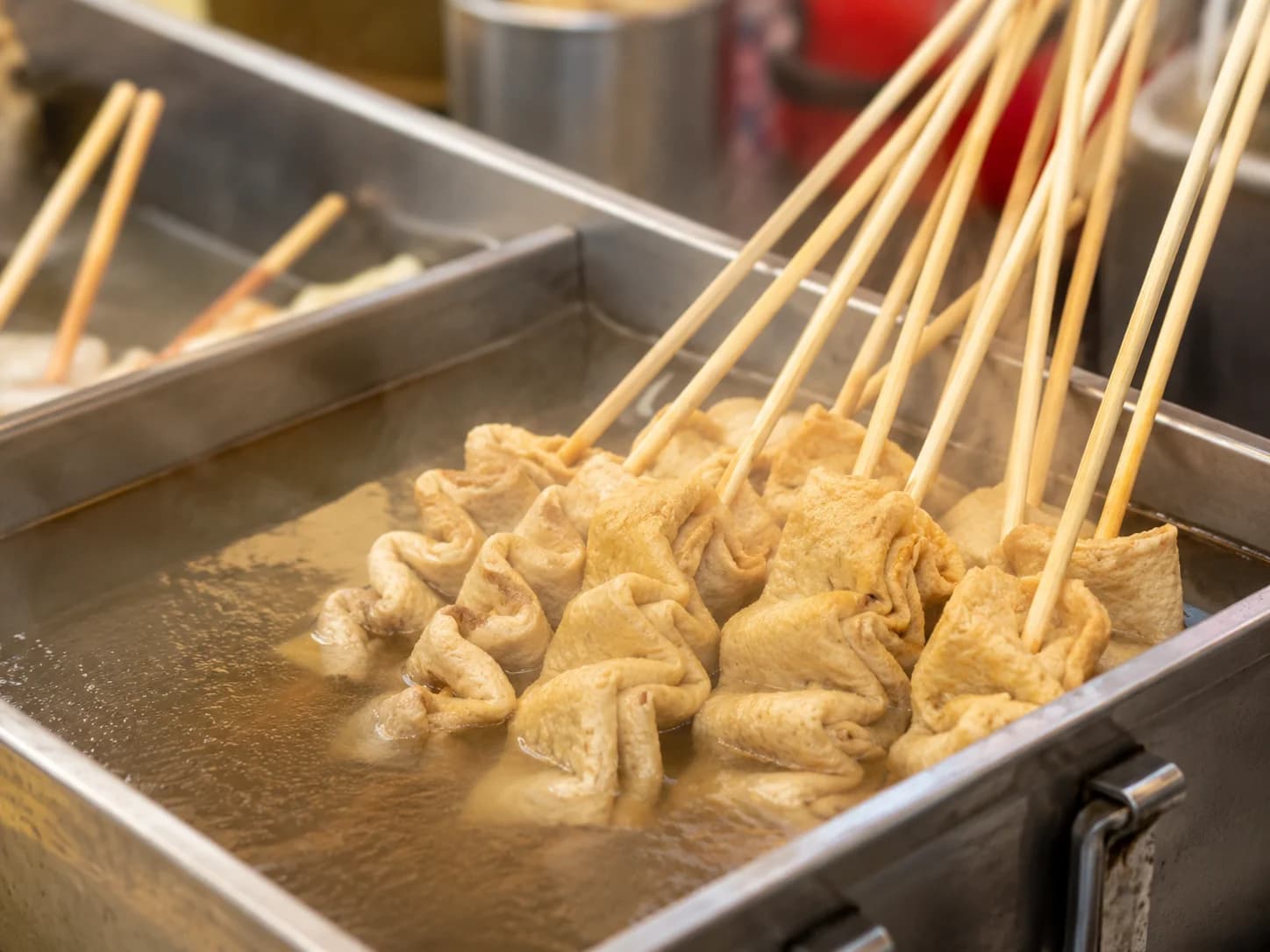
The version many travelers notice first is skewered eomuk in hot broth — a long piece folded onto a wooden skewer, kept warm in light broth at street stalls, markets, or bunsik shops. People stand near the stall, eat the skewer, and sometimes sip the broth from a paper cup. In cold weather that broth matters; sometimes it is the reason people stop. A warm eomuk skewer on a winter street is quick, cheap, and deeply comforting.
You may also hear odeng (오뎅), a casual word especially for skewered fish cake in broth — from Japanese oden, while eomuk is the more standard Korean word. Koreans use both naturally. Eomuk is not only one shape: flat sheets sliced into tteokbokki or soup; skewered street-stall versions; ball-shaped pieces in soups; long bar-style snacks with vegetables, spicy flavor, or cheese; and Busan-style shops with many shapes and gift-box products. Busan is strongly connected with fish cake culture as a port city — when Koreans say Busan eomuk they often imagine a more serious shop, though even there styles range from simple to fancy.
Eomuk also appears inside tteokbokki — pieces soak up the red sauce and make the dish feel more like a snack meal. Some people like the fish cake as much as the rice cakes. Eomuk and tteokbokki belong to the same casual world: bunsik shops, school areas, market stalls, winter streets, paper cups of broth, and people eating quickly before going somewhere else. It is usually a familiar supporting character, not the star of a fancy meal — in soups, lunch boxes, side dishes, convenience store snacks, and whole shops in Busan.
For a first try, choose one skewer at a street stall or bunsik shop, eat it while warm, sip the broth if offered, then try tteokbokki next to it for the classic pairing. If you are worried about seafood flavor, the broth-skewer version is usually mild and savory — not raw fish, more like a soft, warm, slightly chewy snack with a seafood-based background. Good eomuk has a gentle chew; some versions are soft and smooth, others bouncier or thicker depending on the fish paste and starch. Quality varies — a convenience store snack, a market skewer, and a good Busan shop belong to different situations, none automatically wrong.
Once you recognize eomuk, you start seeing it everywhere — in tteokbokki sauce, warm soup, street skewers, snack-shop menus, next to fried food, at winter markets. It stops being "that fish cake thing" and starts feeling like part of daily Korea: warm, savory, chewy, and always nearby.
Keep exploring
Food guide
A local-friendly guide to Korea’s spicy rice cake snack, from chewy tteok and red sauce to bunsik shops, markets, and classic add-ons.
Read guide →
Food guide
A local-friendly first guide to Korean convenience store food, quick meals, snacks, drinks, and 24-hour culture.
Read guide →
Food guide
A local-friendly guide to Korean cup ramyeon, hot water machines, convenience store counters, and easy local pairings.
Read guide →
Food
Simple HAEMIL food guides for understanding what to eat in Korea and how to order without turning every meal into homework.
Read guide →