
Food guide
What Is Twigim? Korea's Fried Snacks for Tteokbokki Sauce
Twigim is one of the easiest Korean foods to understand with your eyes.
Food guide
Twigim is one of the easiest Korean foods to understand with your eyes.
Quick facts
You see something fried, point at it, eat it with tteokbokki sauce — that is already half the story. Twigim, or 튀김, simply means fried food, but at a bunsik shop or street stall it usually means casual fried snacks served next to tteokbokki, eomuk, sundae, and gimbap. Tteokbokki is spicy, sweet, and chewy; twigim is fried and easy to dip. Put them together and the red sauce becomes a dipping sauce for everything on the plate.
You do not always eat twigim dry — dip it into tteokbokki sauce, or ask the shop to pour sauce over it. Sometimes the pieces sit next to the tteokbokki long enough that crisp edges turn soft and red. Fresh and crispy is good; soft with sauce is also good. They are just different moods.
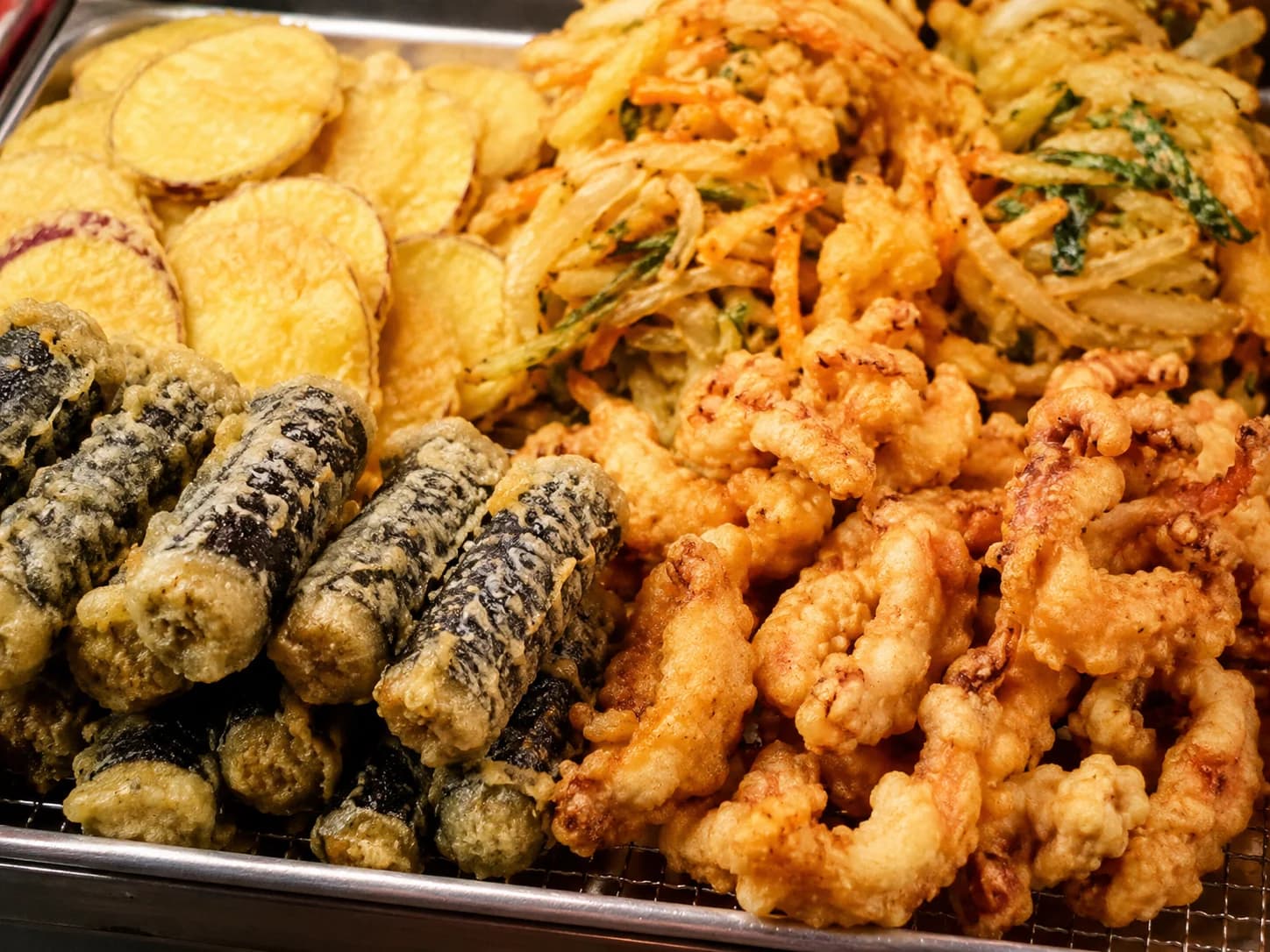
Gimmari is probably the most famous twigim — a fried seaweed roll filled with glass noodles, simple but one of the best foods to dip. Fried mandu (dumplings) are another easy choice: crisp, familiar, and very good with sauce. Fried squid is common too — chewy, salty, satisfying when the batter is still crisp. Fried sweet potato is a softer option if you want something less salty. You may also see fried vegetables, shrimp, or shop-specific pieces; there is no single correct plate, and menus vary a lot by shop.
Look for what seems fresh. If pieces look too old or oily, skip them; if people are ordering and fried snacks are moving quickly, that is usually a better sign. Twigim is sometimes compared to tempura, but bunsik-style twigim is more casual and sauce-friendly — think red tteokbokki tray, paper cups of eomuk broth, and people choosing from a warm display case, not a clean light-batter plate.
Twigim is not usually the main character, but it makes the whole snack meal better. Order tteokbokki alone and it can feel like one spicy dish; add twigim and you get chew from the rice cakes, crunch from the fried snacks, warmth from eomuk broth if you have it, and maybe sundae or gimbap on the side — the classic bunsik feeling of a small table full of things that work together.
For a first try: one tteokbokki, a few pieces of twigim, and a cup of eomuk broth if the shop offers it. Take one fried piece, dip it in the red sauce while it is warm, then try another after it has soaked a little — the softer, saucier version can feel just as good as the crispy one. Korean fried snacks are about sauce, sharing, and eating something simple with something spicy. Once you notice twigim, Korean snack food stops looking like separate items and starts looking like one full plate.
Keep exploring
Food guide
A local-friendly guide to Korea’s spicy rice cake snack, from chewy tteok and red sauce to bunsik shops, markets, and classic add-ons.
Read guide →
Food guide
A local-friendly guide to Korean fish cake, from street-stall skewers and warm broth to the many shapes you see in tteokbokki, soup, and snack shops.
Read guide →
Food guide
A local-friendly first guide to Korean convenience store food, quick meals, snacks, drinks, and 24-hour culture.
Read guide →
Food
Simple HAEMIL food guides for understanding what to eat in Korea and how to order without turning every meal into homework.
Read guide →